Canada Through an Outsider’s Eyes
A Brief Narrative of Canada
Canada is the land of immigrants. In this narrative, I share about Canada from an outsider perspective. Alexander Graham Bell is the greatest Canadian in my perception.
Canada has lot of unused land. A Map described density of canadian population.

It’s not livable in northern parts, close to arctic.
In many parts of Canada, there are no roads, small towns exist like Iqaluit, Nunavut. The Inuits stay in Nunavut.
1. Stories relating to Canada

Growing up in South-India, the perception of Canada was peaceful. Almost everyone around, who I met had a positive view of Canada. Well, we never had any historical lessons on Canada from Tamil Nadu. From the 1980s, there’s a large number of Srilankan-Tamils around Toronto, who escaped from War and settled.
At present, I notice, lot of Tamils escape to Brampton, Mississauga, suburbs of Toronto in Ontario. As lot of immigrants have moved to these areas, the town’s have been nicknamed as Brown-town. I earnestly wish, they’d try to learn good things from the new land, integrate, contribute, be inclusive, friends with all, not live inside their bubbles.
But, Why even hear or go through basic History of Canada?
From South-India’s perspective, you can notice a land, being settled from nothing, a country building institutions and becoming prosperous. Not only that, the challenges, issues the country faced, despite of that, they pulled ahead by integrating British, French descendants, First Nations together as one multi-cultural country.
While in Tamil Nadu’s political domain, lot of Tamils are having hard time accepting, Telugu descendant Tamils. A cosmopolitan polity might be beneficial for all Tamils, yet many are unaccepting and reluctant.
The last time, I came across Canada was in Sir Visvesvaraya’s Resconstruction of India (1920). He spoke highly of Canada, wanting Indians to absorb the operations of statehood functions and industrialization.
Canadians are from all parts of the world, it’s truly a multicultural society. In terms of demographics of Indians in Canada - Punjabi-Canadians are the majority. Majority of the population live on the borders of US-Canada, as further north is much colder.
In my readings of Canadian history, I found the Sikhs immigrated long back into the provinces. Some Sikhs arrived as part of British military contingents for events like Queen Victoria’s Jubilee in 1897, with the first settlers arriving in the early 1900s. They worked in Lumber Mills of Victoria.
I also remember, reading this challenging story of an immigrant from Punjab. He arrived to Canada with nothing, along with his wife. He struggled throughout his life in Canada.
He wrote about cold struggles, not able to get a white collar job.
He felt so happy, when his grandson made it to MIT.
He described all the challenges he faced building his life, as his english skills were poorer. He could not advance much to managerial roles, such stories, I believe needed to be shared among High-schoolers, What a story, right?
I met a family who grew up in Alberta, Canada.
It was captivating hearing their upbringing, grand-parents fleeing from India-Pakistan’s border settlement, and then, finally settling in Alberta. Now the family is in America, hearing their story made me realize about respecting states, provinces, welcoming immigrants.
2. What about the economy of Canada?
A reader from South-India might wonder about Canada and US.
The topic frequently comes in immigration, migration. So this should help to get a picture of Canada.
Firstly, in terms of performance, America’s economy is ahead of Canada.
US GDP in 2023: $27.72 trillion
Canada’s GDP in 2023: $2.89 trillion
US has larger population and about 10 times more larger economy. US real GDP per capita stands at approximately $66,300 (2024). Canada’s GDP per capita stands at approximately $44,400 (2024). US is on its way to produce 50 percent more than an average Canadian. Massive productivity difference and brain drain of Canadians to US. Canada has lost lot of workforce in its history to US.
Economy & Jobs in Canada:
For many Indians, Canada was easier to immigrate before 2017. Unfortunately, currently - the doors are slowly being closed. Canadian Provinces by average economic output per person:
- Alberta - $96,544
- Saskatchewan - $90,425
- Newfoundland and Labrador - $77,201
- British Columbia - $75,662
- Ontario - $74,143
- Quebec - $68,565
- Manitoba - $64,421
- Prince Edward Island - $60,592
- Nova Scotia - $60,343
- New Brunswick - $56,277
Alberta’s economic history, has stories of pioneer farmers, who moved from Midwest America. Their stories make me feel in awe. If only I could share stories of them to Tamil farmers and agriculture, I am sure, Tamil Nadu’s agriculture workers would figure out a way to make the sector world class.
Type of Jobs:
- Alberta: It’s the wealthiest province, oil and gas jobs, agriculture jobs
- Saskatchewan: mining powerhouse and ag-processing jobs
- Newfoundland and Labrador: Offshore oil, Fishing related jobs
- British Columbia: Tech jobs, film/TV production, ports/logistics, forestry, mining, and tourism jobs
- Ontario: Ranges from all type of jobs, manufacturing, finance/insurance/professional services, engineering
- Quebec: advanced manufacturing, aerospace related jobs, hydro-power plant related jobs, precision manufacturing
- Manitoba: Agriculture, Logistics related
- Prince Edward Island: Agriculture, Fishing related processing units
- Nova Scotia: Agriculture, Defense & Aerospace, IT jobs, Tourism, Fishing jobs collapsed in 1992, due to overfishing of Cod
- New Brunswick: Agriculture, Forestry, Mining, Fishing jobs
3. How Canada was formed?
As the bells rang out at noon on July 1, 1867 in Ottawa, Canada officially became a country. The reasons behind uniting to form Canada was due to the following.
Military threat: There was constant threat from American military. Especially during the Civil War, many Canadians feared that next target might look northward towards them. The civil war displayed how American military was stronger.
The belief of manifest destiny was strong during this time, as Americans journeyed, settled westward in their country. Many Americans believed, it was their destiny to rule entire North America.
Economy unity: Railway lines to link entire Canada, no single colony could afford afford alone. Americans announced that the Reciprocity Agreement would end in 1866, i.e end of free trade.
Political Instability: Between 1861 and 1864, two elections, four governments, and three dangerous years, lot of political instability. Being United together means, the internal divisions between French Canadians and Canadians of British origin could end.
Americans lost Quebec war: The American Revolutionary War (1775–1783), When Americans invaded Quebec in 1775, they were eventually driven away, partly after their troops began to raid livestock and food supplies. This conflict resulted in Britain losing the Thirteen Colonies but retaining the cold, unprofitable remnants of the continent. Americans lost, The War of 1812 as Canadian Major-General Isaac Brock helped secure victory.
4. Canada in 1900s:
Canada significantly helped Britain during World War I and World War II. Canada sent over 600,000 soldiers to fight alongside Britain, suffering heavy casualties (67,000 dead) and gaining international recognition. The Second World War transformed, Canada into a major industrial power, doubling its gross national product and creating industries that enriched the post-war economy.
5. After 1940s:
In the post-war world, Canada gained an independent voice and status as a Middle power. It became deeply involved in international bodies like the UN and NATO.
During this period, Canada experienced unprecedented prosperity, which funded the establishment of the welfare state with programs like unemployment insurance and early health planning. Newfoundland became Canada’s 10th province. During 1950s, Canadian diplomat Lester Pearson orchestrate the deployment of the UN’s first peacekeeping force, earning him the Nobel Peace Prize. From 1960-1980s, Canada experience prosperity boom.
6. Post 1960s:
Canadian state adopted, welfare state with Canada Pension Plan and the now, famous universal nationwide medicare, which lot of Americans discuss. Although when I ask to Canadians, fresh off the boat immigrants, they speak of poor quality, slower time, lack of appointment times, poor care in the healthcare system of Canada. Canadian Government signed the, Canada-U.S. Free Trade Agreement (FTA), American Free Trade Agreement (NAFTA), this made lot of manufacturing jobs in Rust belt of America disappear due to no tariffs. In 1991, Goods and Services Tax (GST) was introduced, it allowed the government to raise revenues.
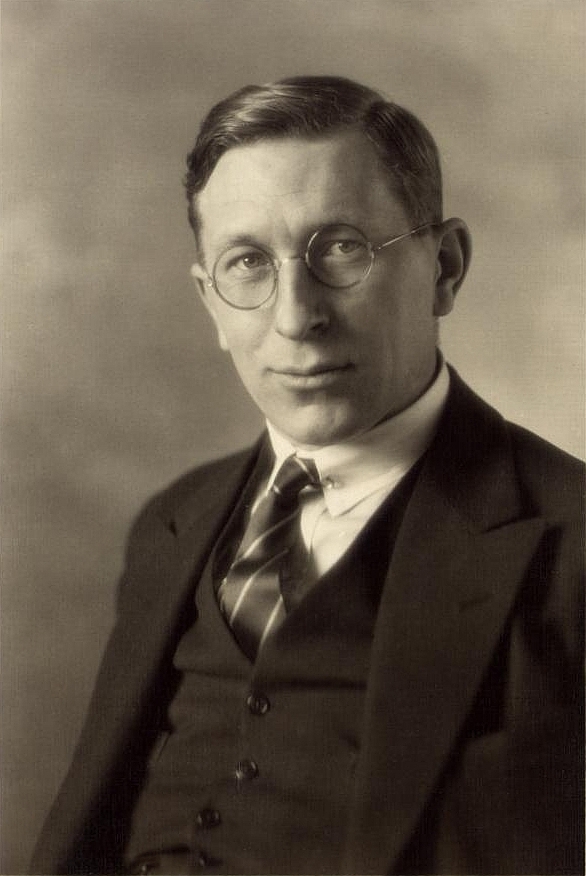
From the 1990s to the present, Canada implemented many public programs to affirm First Nations rights and address historical injustices. In the US, the term “indigenous” is used, not First Nations. Lastly, one of the breakthrough contribution that came from Canada is discovery of insulin by Frederick Banting. Banting was a surgeon, orthopedist and pharmacologist.